

The complete guide
Choosing and fitting a velcro window screen
Which size and mesh do you need?
Five sizes, from 100 x 100 cm up to 200 x 200 cm, in three mesh grades. The picker above carries every combination with its price.
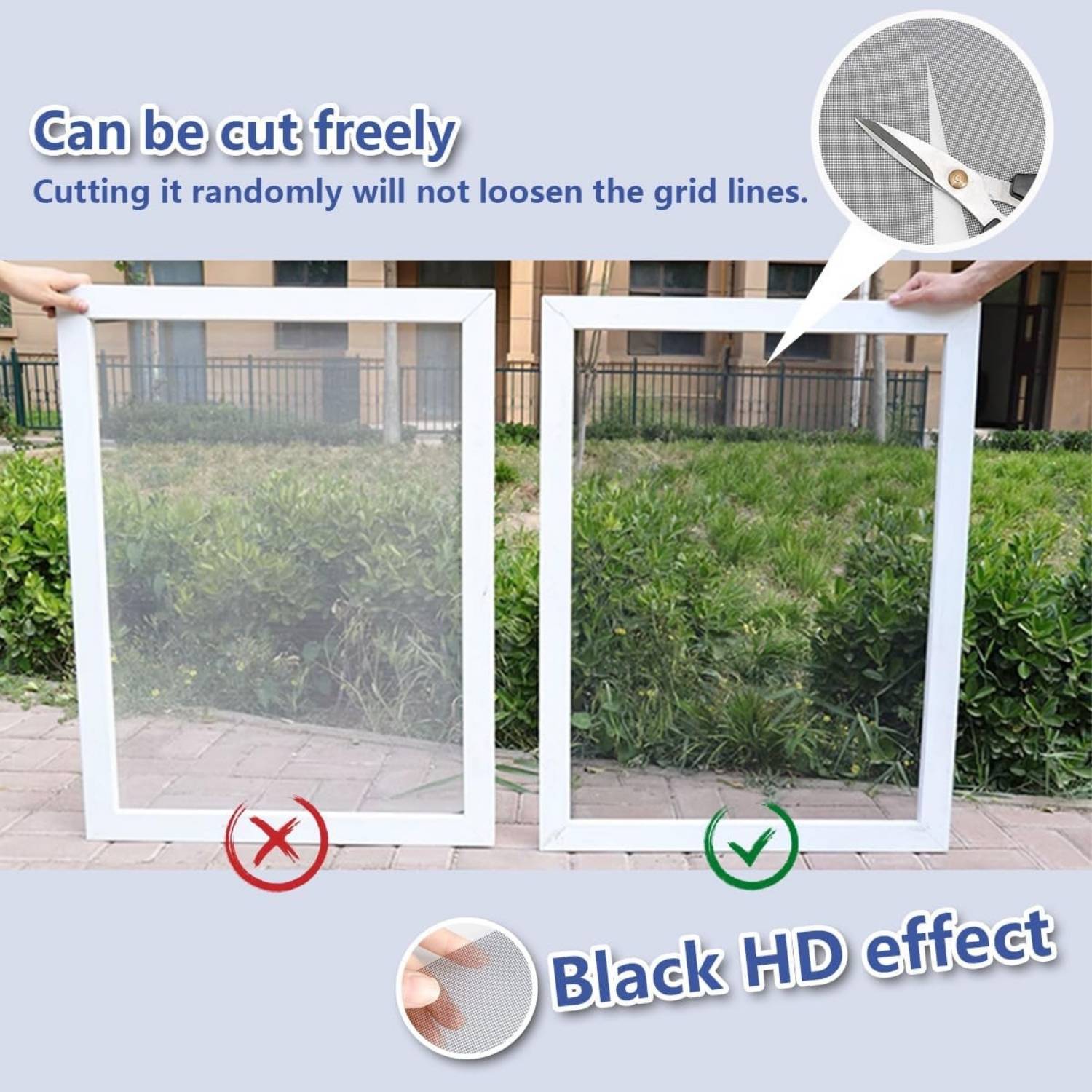
Size first, and there is one rule: order above your opening. The panel cuts down with a blade or a strong pair of scissors, so a size larger than your window is a screen made to measure. A size smaller is a screen you cannot use.
Measure the frame recess, not the glass. The tape goes on the flat face of the frame around the opening, and that face is what the screen has to reach.
The tape is the part that fails, so do this properly
Nothing about a velcro screen goes wrong except the tape, and when the tape goes wrong it is almost always the fitting rather than the product. The adhesive gets exactly one attempt.
Clean the frame face first: dust, then grease, then a final wipe with an alcohol-based cleaner, and let it dry. Work at 18 degrees or warmer in dry air. If the room is cold, run a hair dryer over the frame and the strip before you start.
Hold the strip by its edges and peel the liner back about 25mm at a time, laying the tape as you go down one side and then the next. Do not touch the glue with your fingers.
Then press. The adhesive is pressure sensitive, so the back of a teaspoon run along the whole strip is what actually sticks it down, and the corners are the part everyone under-presses and the part that lifts first.
Last, wait. Give it 24 hours before you hang the screen on it. A strip that lets go cannot be stuck back down.
Three meshes, and which one is yours
Standard grey is 18 x 16 threads to the square inch, vinyl-coated glass yarn, 66% open area. It is the airiest and the least visible, and it stops flies, mosquitoes and wasps.
Midge is black, 20 x 20, a heavier 0.33mm strand and 45% open area. It stops midges, gnats and sand flies, the ones that walk straight through standard mesh. Pick it on where you live rather than on how the room looks: near a lake, a river, marshland or the coast, this is the one.
Pet mesh is the odd one out because it is not fibreglass at all. Vinyl-coated polyester yarn woven 10 x 16, strong enough to take claws, and still clear to see through. If you have a cat, the decision is already made, because standard mesh lasts days.
All three are sold as replacement mesh on their own, so a screen that gets damaged can be re-skinned rather than binned.
Windows that are not rectangles
This is where a cut-to-fit screen earns its price. Sash, awning, casement, hopper and slider windows all take it, old frames and new, because all the tape needs is a flat face around the opening.
An out-of-square window in an old house is no harder than a square one, and neither is a rhomboid or a shaped opening, because you are cutting the panel to the window rather than hoping a frame fits. Vans, boats and motorhomes are the same story: nothing gets drilled into anything.
Large openings work too. Screening an outdoor entertaining area is a matter of buying the biggest panel and adding hook-and-loop tape, which is sold on its own.
10,000 openings, then a drawer
The VELCRO brand strips are rated past 10,000 open-and-close cycles, which on a window you use daily is a decade of summers.
To open the window, peel one edge back and press it down again afterwards. That is the honest difference against the magnetic window screen, which runs on a slim PVC frame and lifts off with a finger tab. On a window you open every morning the magnetic one is worth the extra money. On a bedroom window you crack open in July, this one is the sensible buy.
At the end of the season, wash the panel in warm soapy water, dry it completely, peel it off and store it flat. Leave the tape on the frame and next spring is a two-minute job.