

The complete guide
Choosing a magnetic screen door
Which size do you need?
The range runs from a 60cm side entrance up to a 180cm patio opening, in 210cm and 240cm heights. Every size and its price sits in the picker above, and it updates as you change your pick.
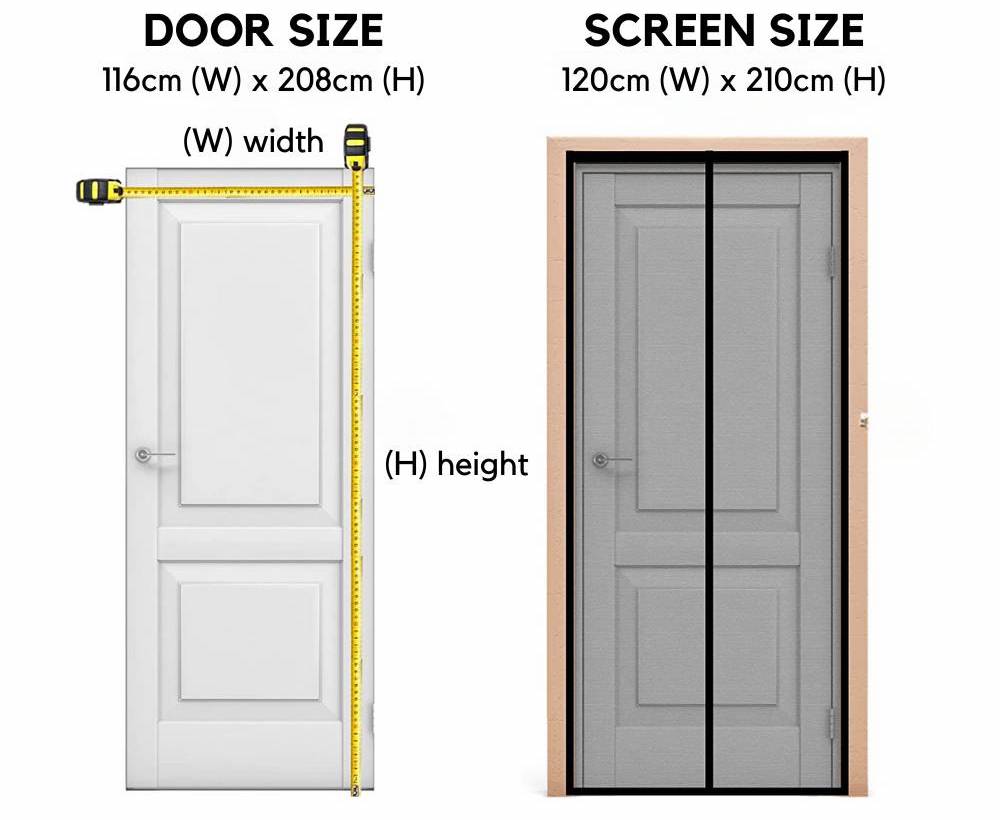
Measure the door frame, not the door. The screen fits around the opening, so the frame width and the height from the sill to the top of the frame are the two numbers that matter.
Then add 2cm at the top and 2cm at each side. That allowance is for the velcro strip stitched along the edge of the screen, and it is the step people skip.
If your measurement lands between two sizes, go up. Mesh will overlap a frame edge without any trouble. It will not stretch to cover a gap, and a gap is where the insects get in. If nothing in the range fits, send us the numbers, because these are made to order as well as stocked.
What you are actually paying for
Every magnetic screen looks the same in a photograph, so it is worth knowing where the money goes.
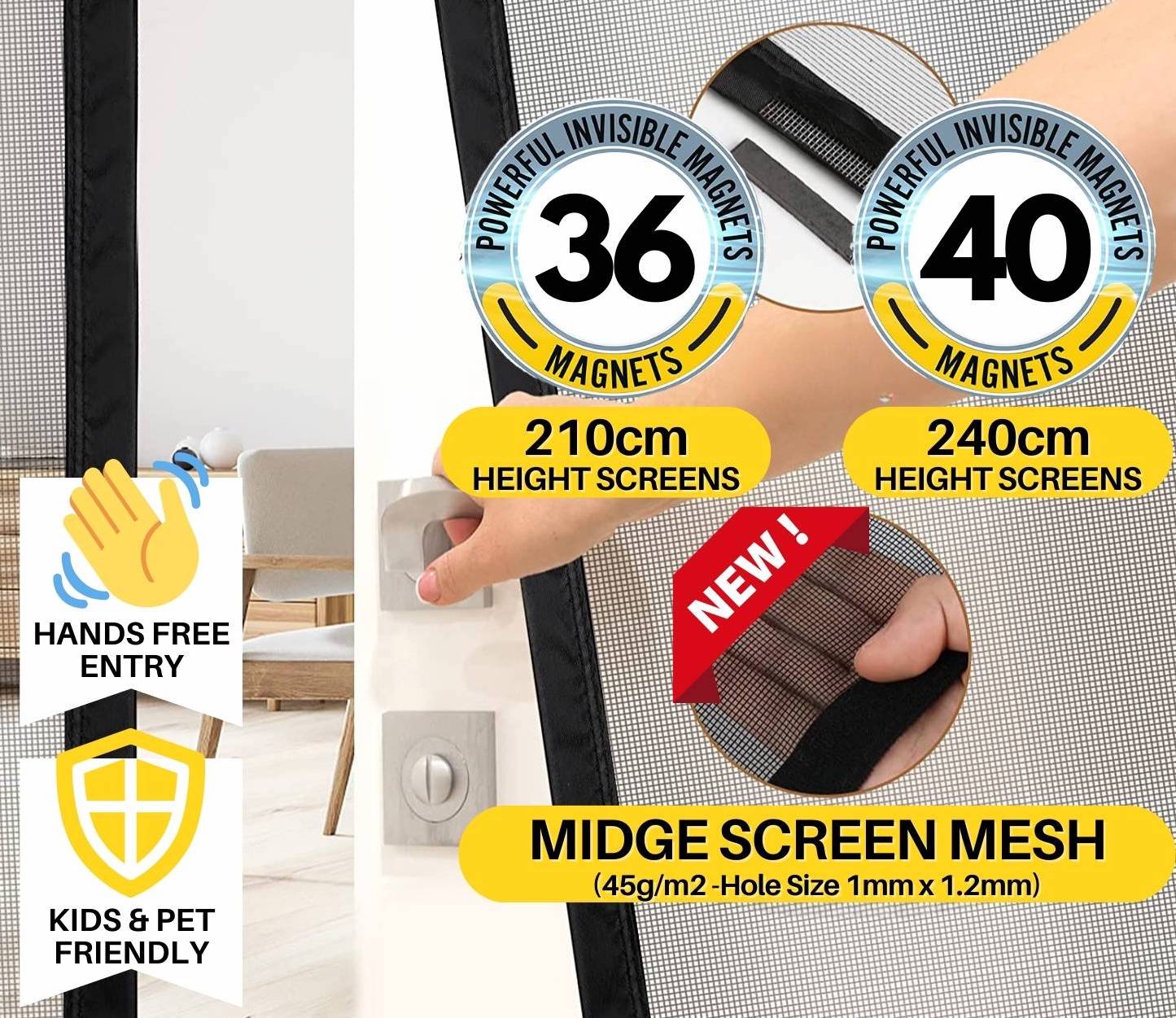
The first thing is the magnet count. This one carries up to 40 down the centre seam. The screens sold in supermarkets and hardware chains run 26 or fewer, spaced further apart, and the result is a seam that closes in the middle and hangs open at the top and the bottom. Flies find that in about a day.
The second is how the magnets are attached. Ours are sewn into the fabric. Glued magnets are the standard shortcut, and glue in a hot doorway lets go by the second summer.
The third is the mesh itself. This is the upgraded midge grade at 15 x 17 density: a heavier weave than the thin nylon on cheap screens, resistant to chemical corrosion, and stiff enough to keep its shape rather than going limp and baggy. It also stops midges, which most fly screens do not.
Doors that are not front doors
Plenty of these never go near a front door.
Sliding and patio doors work well, as long as you fit the screen to the frame surround rather than to the panel that moves. Caravans and motorhomes are a common use, for the same reason as rented flats: nothing gets drilled into anything.
Bi-fold doors are worth a paragraph of their own, because there is a widespread belief that they cannot be screened. They can. The screen goes on the outer frame of the opening, not on the individual panels, so the doors still fold and stack behind it, and you keep the view when the screen is down for the winter.
Out of the bag and onto the frame
Open the packet by hand. Not with scissors, not with a knife. The mesh is folded tight inside the bag and a blade catches it before you know it has, and that is by far the most common way a new screen gets damaged.
Fitting is a few minutes' work. Line the top edge up on the frame, press the velcro down one side and then the other, and walk through it once to check the two halves meet cleanly from top to bottom. If the seam catches anywhere, lift that section of velcro and reset it. It is forgiving.
Off in October, back on in April
Because nothing was fixed to the frame, nothing has to be undone. The screen peels off, folds down small and goes in a drawer over winter.
Wash it before it goes away rather than when it comes back out. Warm soapy water, then hang it up until it is properly dry, because folding it damp is how a screen ends up smelling of a shed.