
The complete guide
Choosing a chain door curtain
What a chain curtain is for
A doorway that never stops being used.
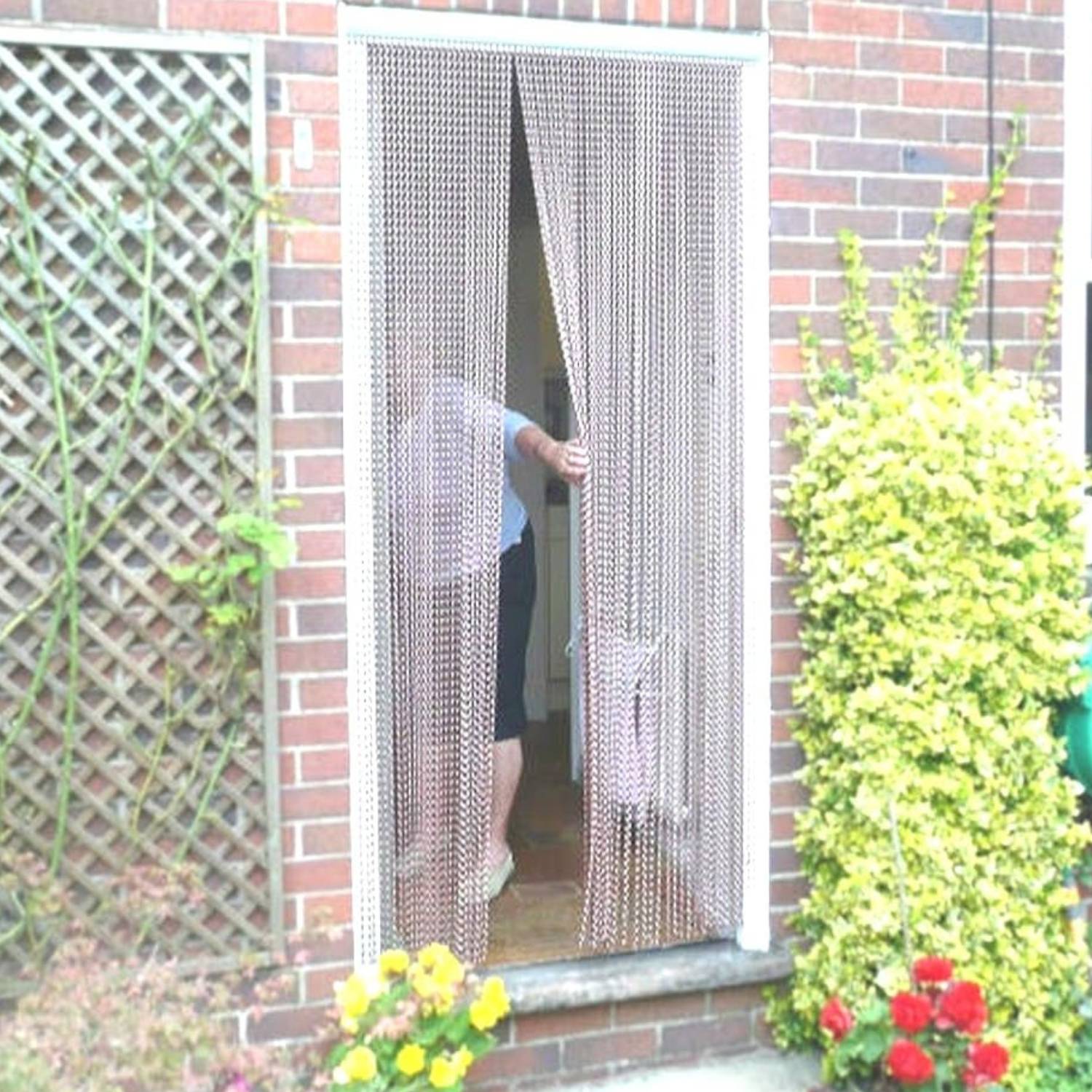
There is nothing to open and nothing to close. You walk at it, the chains part, and they hang straight again behind you. Hands full, no problem, because there is no handle involved at any point.
That is the whole case against a hinged screen door in a busy doorway. A screen door in a kitchen or a shop gets propped open by the second week, and a propped screen door is a decoration. A chain curtain cannot be propped open.
Aluminium, and why the finish matters
The chains are aluminium with an oxidation-treated surface, and both halves of that are worth understanding.
Aluminium does not rust, which already puts it ahead of a steel chain in a doorway. The oxidation treatment then makes the surface resistant to corrosion, which matters because of where these actually get hung: back doors, kitchens, conservatories, anywhere with steam or weather.
What you end up with is a curtain you clean rather than one you maintain. Wipe the chains and that is the whole job.
Putting it up
The header strip hangs on two screws. Mark the positions, check they are level, drill, and lift the strip on. Five minutes with a drill, and the two hanging hooks are already in the box.
The one thing to know before you order: it does need those two screws. If you rent somewhere that allows no holes at all, the string curtain door is the one to look at, because it hangs on a tension rod and needs nothing drilled.
Taking it down again
This gets overlooked and then appreciated. The strip sits on the screws rather than being fixed to them, so the whole curtain lifts off in seconds.
Cleaning a chain curtain in place means scrubbing at head height in a doorway. Cleaning one you can carry to a sink takes a couple of minutes. The same applies when you want the doorway clear for an evening, or you are moving it to another room.
As a room divider
Plenty of these are bought with insects nowhere in the reasoning.
As a divider, chain marks out a zone without walling it off, and it keeps light and air moving between the two spaces. It gives a degree of privacy too: enough to shield a back-of-house area from a casual glance without shutting it away. In cafes, bars and shops it usually ends up doing both jobs at once.
Chain or string
The two curtains solve the same problem and suit different doorways.
Chain is heavier, holds better in a draught, stands up to weather and hard commercial use, and rattles. String is quieter, softer, cheaper to hang because it needs no drill, and it moves more in the wind.
Commercial back door: chain. Rented flat, or a doorway where the noise would get to you: string.
Choosing black or silver
Same curtain, same price, different room.
Silver reads industrial and bounces light around, which suits a kitchen or a retail space. Black recedes, so in a domestic doorway it draws less attention to itself. Neither performs better than the other.