
The complete guide
Choosing and fitting a magnetic window screen
Which size and mesh do you need?
Five sizes, from 100 x 100 cm up to 200 x 200 cm, in standard grey or midge black mesh. Every combination and its price sits in the picker above.
Size first, and the rule is simple: order above your opening. Both the PVC frame and the mesh cut down with a blade or strong scissors, so a size larger than the window becomes a screen made to measure. A size smaller is a screen you cannot use.
Measure the frame recess, not the glass. The screen has to reach the flat face of the frame around the opening.
Permanently temporary
That phrase is the store's own and it is the best description of how these work.
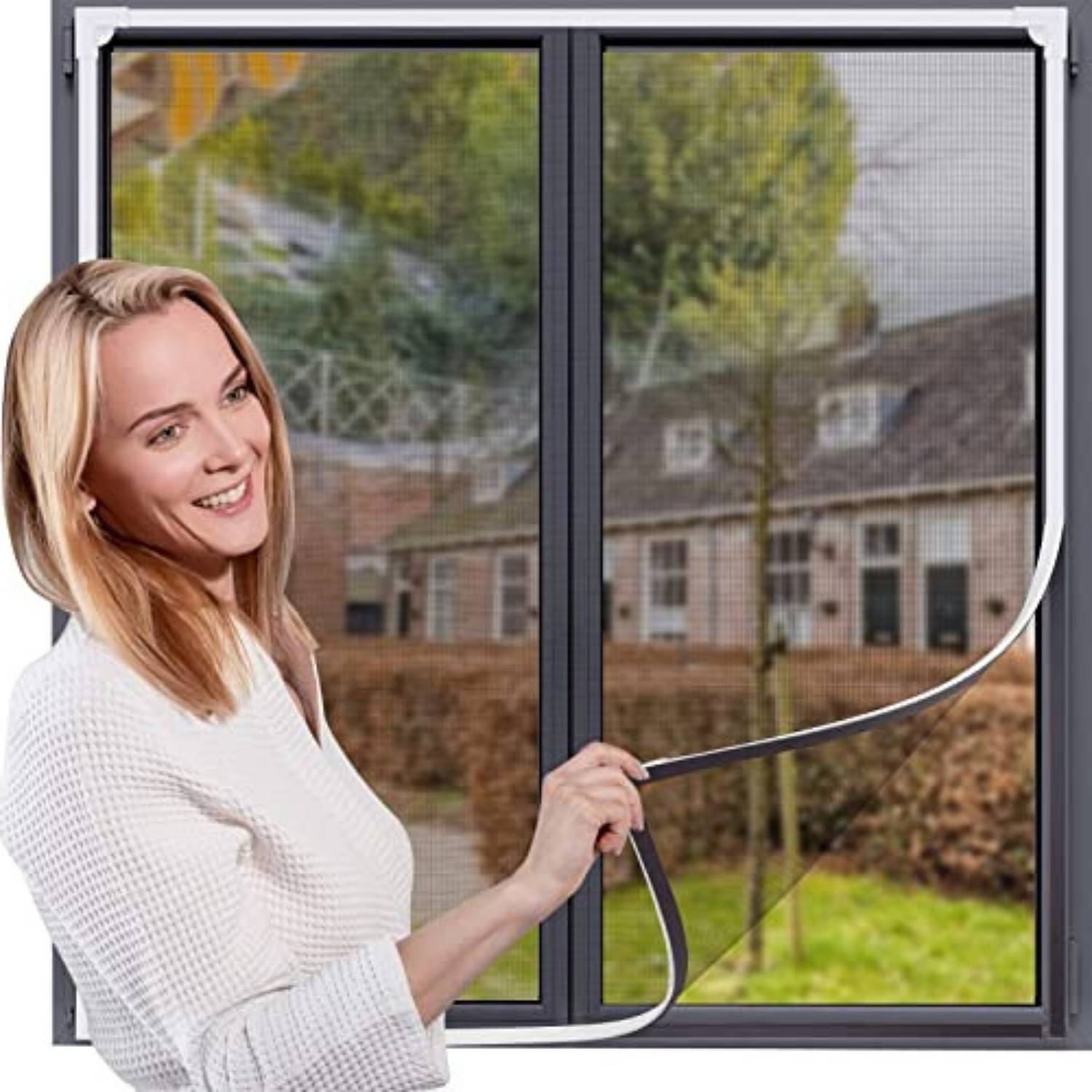
A flexible PVC frame carries a magnetic strip. The strip holds the screen against the window and it stays there all season, but nothing is drilled, nothing is screwed and nothing is glued to the frame. When you want the screen gone, it lifts off and the window is exactly as it was.
That combination is why these end up in rented flats, and why people who own their homes buy them too. The alternative, a traditional aluminium framed screen, is rigid, bulky, obvious from the street and usually somebody else's job to fit.
The finger tabs are the feature
Every magnetic window screen photograph looks the same. The thing that decides whether you like living with one is the bottom corners.
There are finger tabs there. To open the window you hook a tab, pull that corner of the screen away, and reach through. Let the tab go and the screen flexes back and snaps onto the magnets by itself. No lifting the panel off, no leaning it against a wall, no putting it back afterwards.
Magnet attraction carries a lifetime warranty, which matters because losing their pull is the one failure people expect from a magnetic screen and the one thing that is covered outright.
Cutting it to your window
Order a size above your opening. Both the PVC frame and the mesh cut with a blade or a strong pair of scissors, so the panel becomes a screen made for that window rather than a near-enough fit.
Measure the frame recess, not the glass. In an older house, measure every window separately and expect them to differ, because they will, and some of them will not be square. That is not a problem here. Each screen is cut to its own opening, to the millimetre if you want it, which is precisely what a rigid framed screen cannot do.
If the window is bigger than anything in the range, or an unusual shape, ask. These are made to order as well as stocked, and tall windows come up often.
Two meshes
Standard grey is 18 x 16 threads to the square inch, vinyl-coated glass yarn, 66% open area. It stops flies, mosquitoes and wasps and it is the one most windows want.
Midge is black, 20 x 20, a heavier 0.33mm strand, 45% open area. It stops midges, gnats and sand flies as well. Choose it on where you live rather than on how the room looks: near a lake, a river, marshland or the coast, standard mesh will let the small ones through.
Both are fire-retardant and non-combustible, and neither rusts, corrodes or stains. Neither is claw-proof, so if a cat is the reason you are screening the window, the cat-proof screen on pet mesh is the one you want.
Cleaning and winter
Spray it with water and a little detergent and wipe it down where it hangs, or lift it off and wash it in the sink. Let it dry fully before it goes back so the magnetic strip seats flush against the frame.
At the end of the season it comes off, stores flat, and goes back up next spring.